Sam Loyd
Sam Loyd | |
|---|---|
 | |
| Born | Samuel Loyd (1841-01-30)January 30, 1841 Philadelphia, United States |
| Died | April 11, 1911(1911-04-11) (aged 70) |
| Known for | Chess, puzzles, mathematical games |
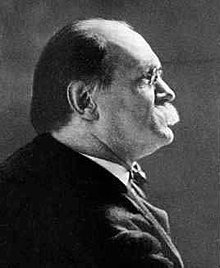
Samuel Loyd (January 30, 1841 – April 10, 1911),[1] born in Philadelphia and raised in New York City, was an American chess player, chess composer, puzzle author, and recreational mathematician.
As a chess composer, he authored a number of chess problems, often with interesting themes. At his peak, Loyd was one of the best chess players in the US, and was ranked 15th in the world, according to chessmetrics.com.
He played in the strong Paris 1867 chess tournament (won by Ignatz von Kolisch) with little success, placing near the bottom of the field.
Following his death, his book Cyclopedia of 5000 Puzzles[2] was published (1914) by his son.[3] His son, named after his father, dropped the "Jr" from his name and started publishing reprints of his father's puzzles.[4]
Loyd (senior) was inducted into the US Chess Hall of Fame in 1987.[5]
Contents
1 Reputation
2 Chess problems
2.1 Excelsior problem
2.2 Steinitz Gambit problem
2.3 Charles XII problem
3 Puzzles
3.1 Trick Donkeys problem
3.2 Back from the Klondike
4 Books
5 See also
6 References
7 Further reading
8 External links
Reputation
Loyd is widely acknowledged as one of America's great puzzle-writers and popularizers, often mentioned as the greatest. Martin Gardner featured Loyd in his August 1957 Mathematical Games column in Scientific American and called him "America's greatest puzzler". In 1898 The Strand dubbed him "the prince of puzzlers". As a chess problemist, his composing style is distinguished by wit and humour.
However, he is also known for lies and self-promotion, and criticized on these grounds—Martin Gardner's assessment continues "but also obviously a hustler". Canadian puzzler Mel Stover called Loyd "an old reprobate", and Matthew Costello called him "puzzledom's greatest celebrity ... popularizer, genius", but also a "huckster" and "fast-talking snake oil salesman".[6]
He collaborated with puzzler Henry Dudeney for a while, but Dudeney broke off the correspondence and accused Loyd of stealing his puzzles and publishing them under his own name. Dudeney despised Loyd so intensely he equated him with the Devil.[7]
Loyd claimed from 1891 until his death in 1911 that he invented the 15 puzzle, for example writing in the Cyclopedia of Puzzles (published 1914), p. 235: "The older inhabitants of Puzzleland will remember how in the early seventies I drove the entire world crazy over a little box of movable pieces which became known as the '14–15 Puzzle'." This is false as Loyd had nothing to do with the invention or popularity of the puzzle, and the craze was in the early 1880s, not the early 1870s.[8] The craze had ended by July 1880 and Loyd's first article on the subject was not published until 1896.[8] Loyd first claimed in 1891 that he had invented the puzzle, and continued to do so until his death.[8] The actual inventor was Noyes Chapman, who applied for a patent in March 1880.[8]
An enthusiast of Tangram puzzles, Loyd popularised them with The Eighth Book Of Tan, a book of seven hundred unique Tangram designs and a fanciful history of the origin of the Tangram, claiming that the puzzle was invented 4,000 years ago by a god named Tan. This was presented as true and has been described as "Sam Loyd's Most Successful Hoax".[9]
Chess problems
Excelsior problem
| a | b | c | d | e | f | g | h | ||
| 8 |           | 8 | |||||||
| 7 | 7 | ||||||||
| 6 | 6 | ||||||||
| 5 | 5 | ||||||||
| 4 | 4 | ||||||||
| 3 | 3 | ||||||||
| 2 | 2 | ||||||||
| 1 | 1 | ||||||||
| a | b | c | d | e | f | g | h | ||
One of his best known chess problems is the following, called "Excelsior" by Loyd after the poem by Henry Wadsworth Longfellow. White is to move and checkmate black in five moves against any defense:
Loyd bet a friend that he could not pick a piece that didn't give mate in the main line, and when it was published in 1861 it was with the stipulation that white mates with "the least likely piece or pawn".
Steinitz Gambit problem
| a | b | c | d | e | f | g | h | ||
| 8 |  | 8 | |||||||
| 7 | 7 | ||||||||
| 6 | 6 | ||||||||
| 5 | 5 | ||||||||
| 4 | 4 | ||||||||
| 3 | 3 | ||||||||
| 2 | 2 | ||||||||
| 1 | 1 | ||||||||
| a | b | c | d | e | f | g | h | ||
One of the most famous chess problems by Loyd. He wrote on this problem: "The originality of the problem is due to the White King being placed in absolute safety, and yet coming out on a reckless career, with no immediate threat and in the face of innumerable checks".[10]
Charles XII problem
| a | b | c | d | e | f | g | h | ||
| 8 | | 8 | |||||||
| 7 | 7 | ||||||||
| 6 | 6 | ||||||||
| 5 | 5 | ||||||||
| 4 | 4 | ||||||||
| 3 | 3 | ||||||||
| 2 | 2 | ||||||||
| 1 | 1 | ||||||||
| a | b | c | d | e | f | g | h | ||
This problem was originally published in 1859. The story involves an incident during the siege of Charles XII of Sweden by the Turks at Bender in 1713. "Charles beguiled this period by means of drills and chess, and used frequently to play with his minister, Christian Albert Grosthusen, some of the contests being mentioned by Voltaire. One day while so engaged, the game had advanced to this stage, and Charles (White) had just announced mate in three."
- 1. Rxg3 Bxg3
- 2. Nf3 Bxh2
- 3. g4#
| a | b | c | d | e | f | g | h | ||
| 8 | | 8 | |||||||
| 7 | 7 | ||||||||
| 6 | 6 | ||||||||
| 5 | 5 | ||||||||
| 4 | 4 | ||||||||
| 3 | 3 | ||||||||
| 2 | 2 | ||||||||
| 1 | 1 | ||||||||
| a | b | c | d | e | f | g | h | ||
"Scarcely had he uttered the words, when a Turkish bullet, shattering the window, dashed the White knight off of the board in fragments. Grothusen started violently, but Charles, with utmost coolness, begged him to put back the other knight and work out the mate, observing that it was pretty enough. But another glance at the board made Charles smile. We do not need the knight. I can give it to you and still mate in four!"
- 1. hxg3 Be3
- 2. Rg4 Bg5
- 3. Rh4+ Bxh4
- 4. g4#
| a | b | c | d | e | f | g | h | ||
| 8 | | 8 | |||||||
| 7 | 7 | ||||||||
| 6 | 6 | ||||||||
| 5 | 5 | ||||||||
| 4 | 4 | ||||||||
| 3 | 3 | ||||||||
| 2 | 2 | ||||||||
| 1 | 1 | ||||||||
| a | b | c | d | e | f | g | h | ||
Who would believe it, he had scarcely spoken when another bullet flew across the room, and the pawn at h2 shared the fate of the knight. Grothusen turned pale. "You have our good friends the Turks with you," said the king unconcerned, "it can scarcely be expected that I should contend against such odds; but let me see if I can dispense with that unlucky pawn. I have it!" he shouted with a tremendous laugh, "I have great pleasure in informing you that there is undoubtedly a mate in 5."
- 1. Rb7 Be3
- 2. Rb1 Bg5
- 3. Rh1+ Bh4
- 4. Rh2 gxh2
- 5. g4#
| a | b | c | d | e | f | g | h | ||
| 8 | | 8 | |||||||
| 7 | 7 | ||||||||
| 6 | 6 | ||||||||
| 5 | 5 | ||||||||
| 4 | 4 | ||||||||
| 3 | 3 | ||||||||
| 2 | 2 | ||||||||
| 1 | 1 | ||||||||
| a | b | c | d | e | f | g | h | ||
In 1900, Friedrich Amelung pointed out that in the original position, if the first bullet had struck the rook instead of the knight, Charles would still have a mate in six.
- 1. Nf3 Be1
- 2. Nxe1 Kh4
- 3. h3 Kh5
- 4. Nd3 Kh4
- 5. Nf4 h5
- 6. Ng6#
| a | b | c | d | e | f | g | h | ||
| 8 | | 8 | |||||||
| 7 | 7 | ||||||||
| 6 | 6 | ||||||||
| 5 | 5 | ||||||||
| 4 | 4 | ||||||||
| 3 | 3 | ||||||||
| 2 | 2 | ||||||||
| 1 | 1 | ||||||||
| a | b | c | d | e | f | g | h | ||
In 2003, ChessBase posted a fifth variation, attributed to Brian Stewart. After the first bullet took out the knight, if the second had removed the g-pawn rather than the h-pawn, Charles would be able to mate in ten.
- 1. hxg3 Be1
- 2. Rg4 Bxg3
- 3. Rxg3 Kh4
- 4. Kf4 h5
- 5. Rg2 Kh3
- 6. Kf3 h4
- 7. Rg4 Kh2
- 8. Rxh4+ Kg1
- 9. Rh3 Kf1
- 10. Rh1#
Puzzles
Trick Donkeys problem

Sam Loyd's trick donkeys problem
One of Loyd's notable puzzles was the "Trick Donkeys". It was based on a similar puzzle involving dogs published in 1857. In the problem, the solver must cut the drawing along the dotted lines and rearrange the three pieces so that the riders appear to be riding the donkeys.
Back from the Klondike

A modern rendering of the "Back from the Klondike" puzzle
This is one of Sam Loyd's most famous puzzles, first printed in the New York Journal and Advertiser, April 24, 1898 (as far as available evidence indicates). Loyd's original instructions were to:
Start from that heart in the center and go three steps in a straight line in any one of the eight directions, north, south, east or west, or on the bias, as the ladies say, northeast, northwest, southeast or southwest. When you have gone three steps in a straight line, you will reach a square with a number on it, which indicates the second day's journey, as many steps as it tells, in a straight line in any of the eight directions. From this new point when reached, march on again according to the number indicated, and continue on, following the requirements of the numbers reached, until you come upon a square with a number which will carry you just one step beyond the border, when you are supposed to be out of the woods and can holler all you want, as you will have solved the puzzle.
Books
Sam Loyd's Book of Tangram Puzzles (.mw-parser-output cite.citationfont-style:inherit.mw-parser-output qquotes:"""""""'""'".mw-parser-output code.cs1-codecolor:inherit;background:inherit;border:inherit;padding:inherit.mw-parser-output .cs1-lock-free abackground:url("//upload.wikimedia.org/wikipedia/commons/thumb/6/65/Lock-green.svg/9px-Lock-green.svg.png")no-repeat;background-position:right .1em center.mw-parser-output .cs1-lock-limited a,.mw-parser-output .cs1-lock-registration abackground:url("//upload.wikimedia.org/wikipedia/commons/thumb/d/d6/Lock-gray-alt-2.svg/9px-Lock-gray-alt-2.svg.png")no-repeat;background-position:right .1em center.mw-parser-output .cs1-lock-subscription abackground:url("//upload.wikimedia.org/wikipedia/commons/thumb/a/aa/Lock-red-alt-2.svg/9px-Lock-red-alt-2.svg.png")no-repeat;background-position:right .1em center.mw-parser-output .cs1-subscription,.mw-parser-output .cs1-registrationcolor:#555.mw-parser-output .cs1-subscription span,.mw-parser-output .cs1-registration spanborder-bottom:1px dotted;cursor:help.mw-parser-output .cs1-hidden-errordisplay:none;font-size:100%.mw-parser-output .cs1-visible-errorfont-size:100%.mw-parser-output .cs1-subscription,.mw-parser-output .cs1-registration,.mw-parser-output .cs1-formatfont-size:95%.mw-parser-output .cs1-kern-left,.mw-parser-output .cs1-kern-wl-leftpadding-left:0.2em.mw-parser-output .cs1-kern-right,.mw-parser-output .cs1-kern-wl-rightpadding-right:0.2em
ISBN 0-486-22011-7): by Sam Loyd
Mathematical Puzzles of Sam Loyd (
ISBN 0-486-20498-7): selected and edited by Martin Gardner
More Mathematical Puzzles of Sam Loyd (
ISBN 0-486-20709-9): selected and edited by Martin Gardner
The Puzzle King: Sam Loyd's Chess Problems and Selected Mathematical Puzzles (
ISBN 1-886846-05-7): edited by Sid Pickard
The 15 Puzzle (
ISBN 1-890980-15-3): by Jerry Slocum and Dic Sonneveld
Sam Loyd's Cyclopedia of 5000 Puzzles, Tricks and Conundrums with Answers
ISBN 0-923891-78-1
Sam Loyd and his Chess Problems by Alain C. White
The 8th Book of Tan by Sam Loyd[11]
See also
- Henry Dudeney
References
^ Harry Golombek, Golombek's Encyclopedia of Chess, 1977,
ISBN 0-517-53146-1
^ Sam Loyd's Cyclopedia of 5000 Puzzles, Tricks and Conundrums with Answers
ISBN 0-923891-78-1
^ Loyd, Sam (1914). Cyclopedia of Puzzles. New York: Lamb Publishing Company. Retrieved December 14, 2017 – via Internet Archive.
^ Martin Gardner's Mathematical Puzzles and Diversions Chapter 9 Pg 79
^ "Sam Loyd". World Chess Hall of Fame. Archived from the original on 2017-04-04.
^ Costello, Matthew J. (1996-09-16), The Greatest Puzzles of All Time, Courier Dover Publications, p. 45 (Sam Loyd and the Vanishing Puzzle), ISBN 978-0-486-29225-0
^ Alex Bellos, Alex's Adventures in Numberland (2010)
^ abcd The 15 Puzzle (
ISBN 1-890980-15-3): by Jerry Slocum and Dic Sonneveld
^ Sam Loydʼs Most Successful Hoax
^ Alain C. White, Sam Loyd and his chess problems, 1913, p. 125
^ The 8th Book of Tan (1903).
Further reading
Sam Loyd: His Story and Best Problems, by Andrew Soltis, Chess Digest, 1995,
ISBN 0-87568-267-7
External links
 | Wikimedia Commons has media related to Sam Loyd. |
| Part of a series on | ||||||||||||
| Puzzles | ||||||||||||
|---|---|---|---|---|---|---|---|---|---|---|---|---|
 | ||||||||||||
Types
| ||||||||||||
Topics
| ||||||||||||
Lists
| ||||||||||||
Sam Loyd Company Site – includes biography and his puzzles
Biography from the School of Mathematics and Statistics website at the University of St Andrews
Chess
Sam Loyd player profile and games at Chessgames.com- Chessmetrics entry for Loyd
Interactive puzzle
Farmer and Wife to Catch Rooster and Hen – interactive Sam Loyd's puzzle- Solve Loyd's 16 squares puzzle interactively
Books
The Sam Loyd Cyclopedia of Puzzles – The complete 1914 book by Sam Loyd (public domain) scanned
The Eighth Book of Tan by Sam Loyd, (1903).
Math Games – The Sam Loyd Cyclopedia of Puzzles, by Ed Pegg Jr., January 3, 2005 – announcement of scans and overview
Index of Math Puzzles, by Don Knuth
Authority control  |
|
|---|


