Third Republic of Korea
Republic of Korea .mw-parser-output .noboldfont-weight:normal 대한민국 大韓民國 | |||||||||
|---|---|---|---|---|---|---|---|---|---|
| 1963–1972 | |||||||||
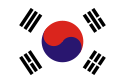 Flag  Coat of arms | |||||||||
Anthem: 애국가 "Aegukga" | |||||||||
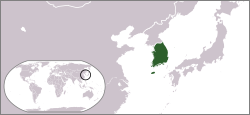 | |||||||||
| Capital | Seoul | ||||||||
| Common languages | Korean | ||||||||
| Government | Republic under a military dictatorship | ||||||||
• 1962–1972 | Park Chung-hee | ||||||||
| Prime Minister | |||||||||
• 1963–1964 | Choi Tu-son | ||||||||
• 1964–1970 | Chung Il-kwon | ||||||||
• 1970–1971 | Baek Du-jin | ||||||||
• 1971–1972 | Kim Jong-pil | ||||||||
| Legislature | National Assembly | ||||||||
| Historical era | Cold War | ||||||||
• Established | 1963 | ||||||||
• October Restoration | 1972 | ||||||||
| Currency | South Korean won | ||||||||
| ISO 3166 code | KR | ||||||||
| |||||||||
| Today part of |  South Korea South Korea | ||||||||

Part of a series on the | ||||||||||||||||||
|---|---|---|---|---|---|---|---|---|---|---|---|---|---|---|---|---|---|---|
| History of South Korea | ||||||||||||||||||
 | ||||||||||||||||||
Prelude to Division 1919–48 | ||||||||||||||||||
| ||||||||||||||||||
First Republic 1948–60 | ||||||||||||||||||
| ||||||||||||||||||
Second Republic 1960–61 | ||||||||||||||||||
| ||||||||||||||||||
Constitutional Vacuum 1961–63 | ||||||||||||||||||
| ||||||||||||||||||
Third Republic 1963–72 | ||||||||||||||||||
| ||||||||||||||||||
Fourth Republic 1972–81 | ||||||||||||||||||
| ||||||||||||||||||
Fifth Republic 1981–88 | ||||||||||||||||||
| ||||||||||||||||||
Sixth Republic 1988–present | ||||||||||||||||||
| ||||||||||||||||||
 South Korea portal South Korea portal | ||||||||||||||||||
The Third Republic of South Korea was the government of South Korea from 1963 to 1972. It was presented as a return to civilian rule after a period of rule by the military junta known as the Supreme Council for National Reconstruction which in 1961 had overthrown the Second Republic of South Korea. However, throughout this period the presidency was held by Park Chung-hee, who is the father of Park Geun-hye (who was president of South Korea between February 2013 and March 2017), who had also been an influential member of the junta. He left his military post in order to run as a civilian in the presidential election.
Park ran again in the election of 1967, taking 51.4% of the vote.[1] At the time, the presidency was constitutionally limited to two terms, but a constitutional amendment was forced through the National Assembly in 1969 to allow him to seek a third term.[2] He was re-elected in the 1971 presidential election. The leading opposition candidate was Kim Dae-jung, who lost by a narrow margin.[3]
On December 6, 1971, Park declared a state of national emergency. On July 4, 1972, he announced plans for Korean reunification in a joint communique with North Korea. Park declared martial law on October 17, 1972, dissolving the National Assembly. He also announced plans to eliminate the popular election of the president.
The Third Republic was replaced in 1972 by the Fourth Republic of Korea under the Third Republic's president Park Chung-hee after the adaption of the Yusin Constitution in October 1972.
Contents
1 Economy
2 Education
3 International relations
4 See also
5 Notes
6 References
Economy
The South Korean economy grew rapidly during the Third Republic. The South Korean government used the influx of foreign aid from Japan and the United States to provide loans to export businesses with no interest. It also provided financial support for industrial projects, such as the construction of the POSCO steel mill, which came online early in the Fourth Republic.
Education
The government introduced several reforms to the educational system. In 1968, the middle-school entrance examinations were abolished, placing all middle schools on an equal footing.[4]
Also in 1968, a Charter of National Education was adopted,[5] emphasizing nationalism and anti-communism in education. The charter outlined four goals for education: national revitalization, creating self-reliant individuals, promulgating a new cooperative image of the nation, and supporting anti-communism. [6]
Likewise, the government sought to reduce political activism among college students by increasing academic competition. The government allowed universities and colleges to recruit up to 130% of their graduation quotas, so that students would be forced to compete against one another in order to graduate. However, student activism continued at a reduced level despite these measures.
International relations
The Third Republic of South Korea began to take an increasingly prominent role in international relations. Relations with Japan were normalized in an agreement ratified on August 14, 1965.[7] The government continued its close ties with the United States, and continued to receive large amounts of foreign aid. A status of forces agreement was concluded in 1965, clarifying the legal situation of the U.S. forces stationed there.[8] Soon thereafter, South Korea entered the Vietnam War, eventually sending a total of 300,000 soldiers to fight alongside the United States and South Vietnam.[9]
See also
- History of South Korea
- History of Korea
- List of Korea-related topics
Notes
^ Yonhap (2004, p. 271).
^ Nahm (1996, p. 423); Yonhap, loc. cit.
^ Nahm (1996, p. 424)
^ KOIS (2003, p. 336)
^ KOIS (2003, p. 336); Yang (1999, p. 757)
^ Yang (loc. cit.)
^ Cumings (1997, p. 320).
[10] Cumings (1997, p. 321).
^ Nahm (1996, p. 425).
References
Cumings, Bruce (1997). Korea's place in the sun. New York: W.W. Norton. ISBN 0-393-31681-5..mw-parser-output cite.citationfont-style:inherit.mw-parser-output qquotes:"""""""'""'".mw-parser-output code.cs1-codecolor:inherit;background:inherit;border:inherit;padding:inherit.mw-parser-output .cs1-lock-free abackground:url("//upload.wikimedia.org/wikipedia/commons/thumb/6/65/Lock-green.svg/9px-Lock-green.svg.png")no-repeat;background-position:right .1em center.mw-parser-output .cs1-lock-limited a,.mw-parser-output .cs1-lock-registration abackground:url("//upload.wikimedia.org/wikipedia/commons/thumb/d/d6/Lock-gray-alt-2.svg/9px-Lock-gray-alt-2.svg.png")no-repeat;background-position:right .1em center.mw-parser-output .cs1-lock-subscription abackground:url("//upload.wikimedia.org/wikipedia/commons/thumb/a/aa/Lock-red-alt-2.svg/9px-Lock-red-alt-2.svg.png")no-repeat;background-position:right .1em center.mw-parser-output .cs1-subscription,.mw-parser-output .cs1-registrationcolor:#555.mw-parser-output .cs1-subscription span,.mw-parser-output .cs1-registration spanborder-bottom:1px dotted;cursor:help.mw-parser-output .cs1-hidden-errordisplay:none;font-size:100%.mw-parser-output .cs1-visible-errorfont-size:100%.mw-parser-output .cs1-subscription,.mw-parser-output .cs1-registration,.mw-parser-output .cs1-formatfont-size:95%.mw-parser-output .cs1-kern-left,.mw-parser-output .cs1-kern-wl-leftpadding-left:0.2em.mw-parser-output .cs1-kern-right,.mw-parser-output .cs1-kern-wl-rightpadding-right:0.2em
Lee, Ki-baek, tr. by E.W. Wagner & E.J. Shultz (1984). A new history of Korea (rev. ed.). Seoul: Ilchogak. ISBN 89-337-0204-0.CS1 maint: Multiple names: authors list (link)
Nahm, Andrew C. (1996). Korea: A history of the Korean people (2nd ed.). Seoul: Hollym. ISBN 1-56591-070-2.
Yang, Sung Chul (1999). The North and South Korean political systems: A comparative analysis (rev. ed.). Seoul: Hollym. ISBN 1-56591-105-9.
Yonhap News Agency (2004). Korea Annual 2004. Seoul: Author. ISBN 89-7433-070-9.
Coordinates: 37°35′N 127°0′E / 37.583°N 127.000°E / 37.583; 127.000


